
Righteous’s Fit Chart Broken Down: Sidestepping Typical Fit Mistakes
Because you can’t try garments on first, nothing triggers more returns than this in the fashion business. Righteous clothing has cultivated a following on bold graphics and streetwear silhouettes, but even the most eye-catching design falls flat if the fit is wrong. Learning how Righteous garments are cut, where they run loose, and where they run close to the body, will cut down on time, money, and the hassle of a return shipment. The following breakdown lays out the real-world details of sizing so your next order arrives ready to wear, not bound for the return box.
Reliability is a big part of why the Righteous name has become such a well-known presence in streetwear circles. Buyers who grasp the brand’s sizing logic tend to report fewer sizing headaches than those who assume from a single unrelated brand’s numbers. Since sizing habits differ wildly between labels, treating any buy as its own decision, rather than assuming a blanket sizing norm, is the smartest approach.
What’s Behind So Many Fit Errors
The bulk of sizing errors come down to one thing: shoppers carry over their size from a totally unrelated company to a new one without checking the real dimensions. A medium in one label can vary by two or three inches in chest width from a medium at a different company. This difference is enough to transform a laid-back urban cut into either a sloppy loose result or an restrictive fit across the shoulders.
Ignoring the gap between body measurements and garment measurements is another common error. righteoushoodie.net Body measurements describe you; garment measurements describe the garment on its own, including deliberate extra space added in for style. A hoodie built for an relaxed drop-shoulder shape will always measure larger than your real chest dimension, and that is a deliberate choice, not a mistake in the chart.
Shrinkage after washing is a third factor many fail to consider. Pieces made mostly of cotton, including many Righteous hoodie styles, can shed a small percentage of their size in the first few washes if not cared for properly. Consulting the care label before the first wash and sticking to its instructions reduces this risk quite a bit. Cold water and low heat drying settings preserve fit far better than warm or hot laundering.
The Right Way to Take Your Own Measurements
Three core measurements deserve your attention above all else prior to buying anything: bust, waist, and your preferred length. Loop a soft tape measure around the widest point of your bust, keeping it level and close-fitting yet comfortable. Repeat this around your midsection, commonly slightly above your navel. Jot down your favored length by taking measurements of a hoodie or tee you currently have and fits you well, running from the shoulder seam to the bottom hem.
Note these three numbers down before looking through the Righteous clothing brand’s product pages. Having them ready prevents rushed size choices built on rough guesses or by what “feels right” based on memory alone. Memory can trick you, but a tape measure won’t.
You’ll also benefit from measure a garment you already own that reflects the fit you want in a new item, laid flat, and compare that flat measurement to the product’s posted measurements. This laid-flat technique is more accurate than relying on standard S/M/L labels, since generic sizing categories vary by cut and by season, all the more because Righteous apparel revises its cuts each year.
Decoding the Righteous Size Chart
A size chart commonly presents measurements in inches or cm across a top-to-bottom row of sizes, with chest, waist, and sometimes hip and length figures underneath. The trick is matching your body measurement to the correct row, not the closest matching letter. If you find yourself between two sizes, opting for the larger size is usually the more dependable option for street-style items constructed for an easy fit, while going smaller works best for anyone seeking a slimmer, more tailored look.
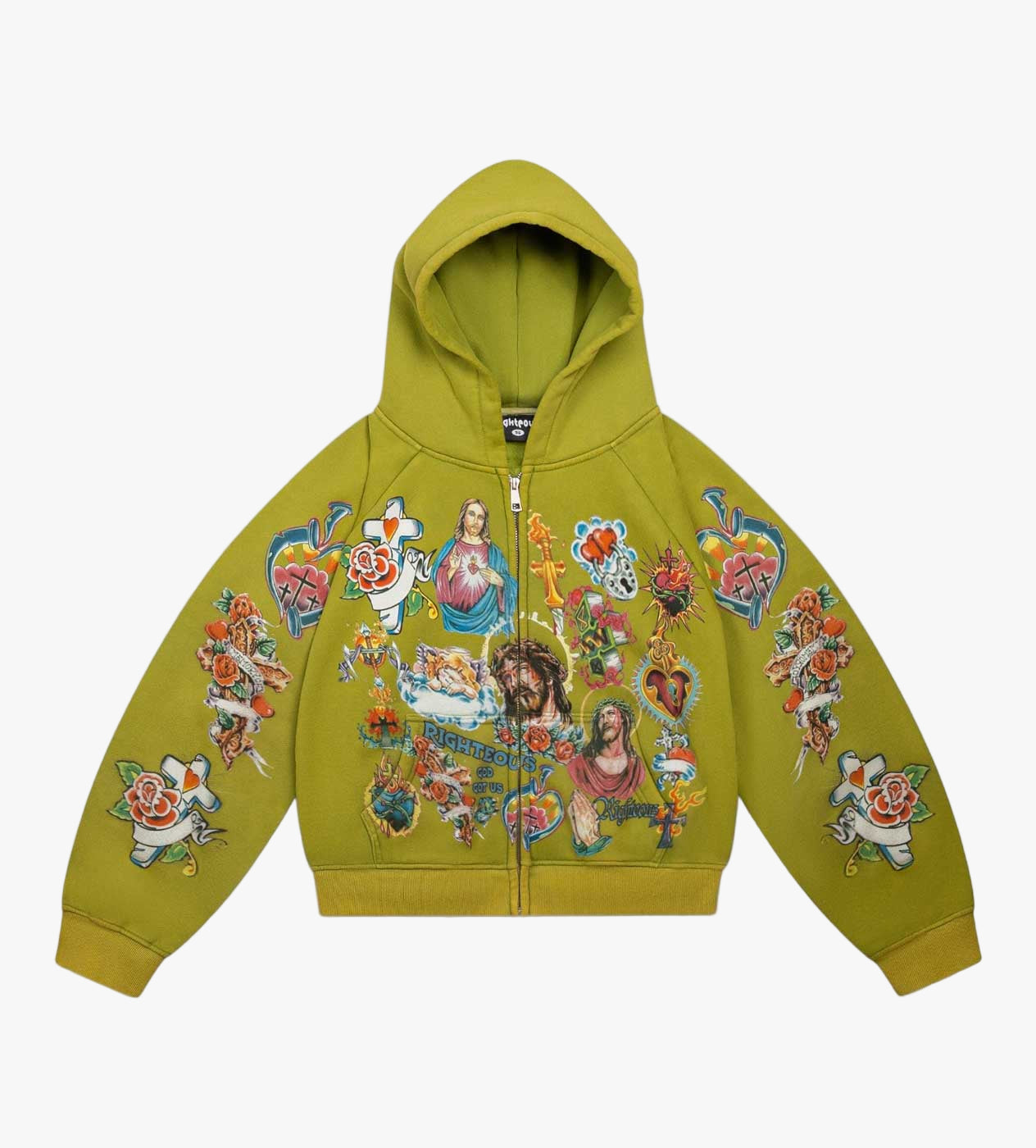
Take special note of the units used. Getting cm and inches mixed up is a frequent and entirely avoidable mistake that causes garments turning up multiple sizes wrong. Confirm the unit indicator at the top of the chart no matter what, even if this isn’t your first Righteous order, since specs can be changed between collections.
Below is a broad comparison of how a easy streetwear silhouette tends to differ from a slim or standard fit across chest measurements, to illustrate why shape preference matters just as much as size letter.
| Labeled Size | Fitted Chest Measurement (inches) | Loose/Oversized Chest Measurement (inches) | Recommended Body Chest Range (inches) |
|---|---|---|---|
| Small | 36-38 | 40-42 | 34-36 |
| Medium | 39-41 | 43-45 | 37-39 |
| Large | 42-44 | 46-48 | 40-42 |
| XL | 45-47 | 49-51 | 43-45 |
This table is a broad example of how fit style alters the numbers underlying the same labeled size, not a stand-in for the exact figures provided on each product page. Be sure to check the exact chart paired with the item you want, since a Righteous hoodie and a close-fitting tee will not have the same proportions even in the same labeled size.
Fit Differences Between Hoodies, Tees, and Bottoms
Seeing as the brand’s hoodies typically are shaped with extra room through the body and sleeves for that signature streetwear drape, carrying over your regular tee size in a hoodie can lead to a surprisingly oversized feel. For those who like a more fitted silhouette, measuring the garment’s chest measurement against your own—as opposed to assuming your typical letter size—avoids disappointment.
The tee styles act in a different way. Because they contain reduced fabric, and are commonly worn beneath outerwear or layers, a snugger fit is more common in tee sizing charts relative to hoodie sizing guides. Someone who wears a large in a Righteous hoodie might comfortably wear a medium in one of the brand’s tee cuts, depending on how oversized each style is designed to be.
Bottom-half pieces contribute a third variable: the waist-to-hip relationship, plus leg length. The brand’s bottom styles, like joggers or shorts, often list both waist and hip figures because a fit that’s correct at the waist can still feel snug or loose at the hip depending on your body shape. Checking both numbers, not just the waist, prevents an unpleasant surprise.
What Customer Reviews of Righteous Say About Fit
Customer feedback is among the most valuable resources when a formal chart alone can’t resolve your specific question. A thorough Righteous review will frequently point out if a piece fits true, runs slightly large, or comes up small, adding real-world insight alongside the stated measurements. Repeated observations across many reviews are steadier as a guide than a lone opinion, since physiques and individual fit tastes vary enormously.
While reading through a We Are Righteous review, watch for mentions of the reviewer’s regular size in other labels and how the Righteous garment compared. A reviewer who says “I’m usually a medium everywhere and this fit true” gives you a helpful data point, even more so when several other reviewers confirm the same experience.
It’s also good practice to note reviewer height and weight when reviewers include them, since such details add context that a flat measurement chart cannot. A fixed chart can’t show that two people with matching chest sizes but different heights might want different hoodie lengths—reviews often bring that nuance to light.
Key Fit Mistakes Shoppers Should Avoid in 2026
The number-one misstep remains ignoring the chart completely and ordering on assumption alone. Even repeat shoppers of We Are Righteous ought to recheck the current charts every season, as fits may be tweaked or refined between releases. A size that once fit true might drift a little once the pattern blocks are updated.
Buyers also stumble into the trap of ignoring piece length while only reviewing width. A hoodie might feature the right chest measurement but a surprisingly long or short body length, which affects how it sits when worn with assorted bottoms. Checking the length figure with a piece you already own is a quick, five-minute step that heads off a lot of regret.
In closing, don’t dismiss the return and exchange policy before you buy, and treat it as a safety net instead of avoiding a purchase out of fear of getting it wrong. Notwithstanding careful measuring, the odd mismatches crop up, and knowing you have that option eliminates extra pressure from every order.
Putting these steps into practice, measuring with care, reading the specific chart for each item, and weighing real customer feedback, transforms a potentially frustrating guesswork into a easy decision. Righteous’s clothing rewards this small amount of upfront effort with garments that fit as they were meant to, season after season.